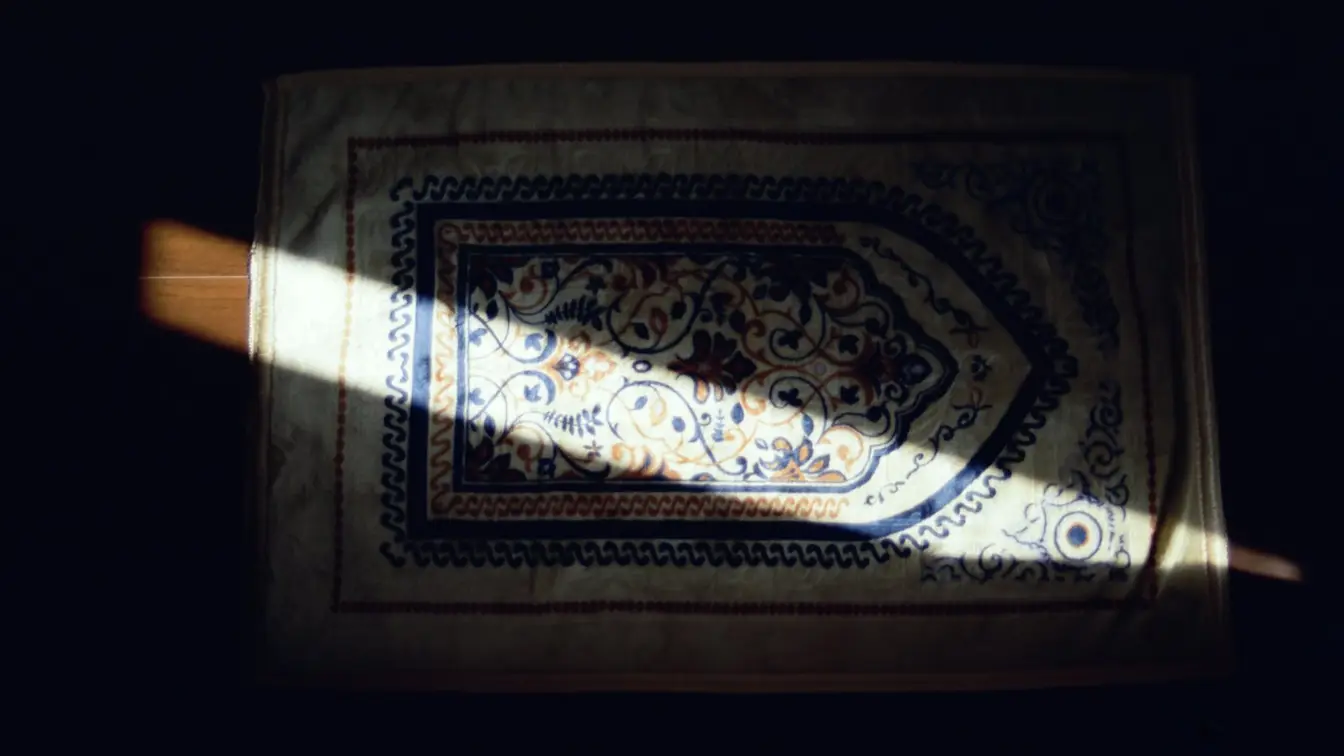
Maybe you prayed as a child and drifted away. Maybe you pray some days and not others. Maybe you've never prayed regularly and feel it's too late to start. Whatever your story, a lot of people are in the same place, and many of them come back.
This is a practical guide to coming back. Not all at once: one salah at a time.
Why it matters
Before the how, the why. Salah is the deed Allah loves most. 'Abdullah ibn Mas'ud said, in al-Bukhari's words:
"I asked the Prophet (ﷺ) 'Which deed is the dearest to Allah?' He replied, 'To offer the prayers at their early stated fixed times.' I asked, 'What is the next (in goodness)?' He replied, 'To be good and dutiful to your parents' I again asked, 'What is the next (in goodness)?' He replied, 'To participate in Jihad (religious fighting) in Allah's cause.' 'Abdullah added, 'I asked only that much and if I had asked more, the Prophet (ﷺ) would have told me more.'"
It's the first thing you'll be asked about. Abu Hurayrah narrated that the Prophet ﷺ said:
"The first deed for which a person will be brought to account on the Day of Resurrection will be his prayer. If it is good then he will have prospered and succeeded, but if it is bad then he will be doomed and have lost. If anything is lacking from his obligatory prayers, the Lord will say, 'Look and see whether My slave did any voluntary prayers, and make up the shortfall in his obligatory prayers from that.' Then all his deeds will be dealt with likewise."
And every salah you pray wipes something away. Abu Hurayrah also narrated that the Prophet ﷺ said:
"What do you think if there was a river by the door of any one of you and he bathed in it five times a day, would there be any trace of dirt left on him?" They said: "No trace of dirt would be left on him." He said: "That is like the five daily prayers, by means of which Allah erases sin."
Why "all five from tomorrow" usually fails
The common plan is to start praying all five, perfectly, from tomorrow. It lasts a few days. Then a Fajr is missed, it feels like failure, and the whole thing stops.
The aim is still all five, on time, and the steps below aren't permission to leave the others: pray every one you can, from today. They're about which prayer to protect first, so each one becomes solid before you focus on the next.
A step-by-step way back
Weeks 1–2: anchor one. Choose the salah that fits your day most easily. For many people that's Maghrib (short, at home, at a clear time) or Isha before bed. Make that one non-negotiable, every day.
Weeks 3–4: anchor a second. Usually the other evening one. Now you have a routine at home.
Weeks 5–8: the working day. Anchor Dhuhr and Asr. These take planning: where you'll pray at work or school, and moving things around them. See how to pray at work.
Work doesn't push salah aside. Allah praises those who don't let it, and says (interpretation of the meaning):
"Men whom neither trade nor sale (business) diverts from the remembrance of Allaah (with heart and tongue) nor from performing As-Salaat (Iqaamat-as-Salaat) nor from giving the Zakaah."
Answering someone who works long days, Shaykh 'Abd al-Rahman al-Barraak said:
"Hence we know that being busy earning a living is not an excuse for not praying. But if there is some unusual hardship involved, it is permissible to pray Zuhr and 'Asr together at the time of either of them, and to pray Maghrib and 'Isha' together at the time of either of them."
Then: Fajr. It's the hardest for most people, so it comes once the rest are steady. See how to wake up for Fajr.
Some people move faster, and that's good. The point is to keep going, not to keep to a timetable.
A few things that make each new prayer stick:
- Tie it to something you already do. Pray Maghrib before you take your coat off. Pray Isha before you pick up your phone in bed.
- Make it easy to start. Leave the mat out where you'll see it. Make wudu before leaving work so you're ready when you get in.
- Set a reminder for the start time and another 30 minutes before it ends, so a busy afternoon doesn't decide for you.
Learn as you go
If you're unsure how to pray, or have forgotten parts, you're far from the only one. Don't wait until you know it all before you start. Pray with what you know, and learn the rest alongside it.
- Learn in order. Wudu first, then the positions of one rak'ah, then what's recited in each. Once one rak'ah is solid, the rest is repetition.
- Ask someone. An imam, a teacher at your local masjid, a family member, or a friend who prays. Most masjids are glad to help, and many run classes for adults. Classes for new Muslims often welcome people who are relearning too.
- Watch it done. YouTube has plenty of step-by-step videos showing how to make wudu and pray. Pick ones from a masjid or teacher you trust, pause and repeat along with them, and check anything that differs with your imam.
- Pray behind an imam. In congregation you just follow the imam's movements, which is the easiest way to get the order back into your body.
- Keep a card on the mat. Write the steps and the Arabic (with transliteration if it helps) on a card. Most people need it for a few weeks, then don't.
Find your people
It's much easier with company. Go to the masjid when you can, so it becomes familiar: Jumu'ah every Friday (it's obligatory for men), and Maghrib at the weekend. Tell one friend what you're doing. Agree to text each other after Fajr or to pray Maghrib together when you can.
Spend time with friends who pray, and who'll notice if you don't.
If you miss one
If you do miss a salah, don't let one become a whole day:
- If you slept through it or forgot it, pray it, then carry on. Anas ibn Malik narrated that the Prophet ﷺ said: "Whoever forgets a prayer or sleeps and misses it, the expiation for that is to pray it when he remembers it." Sahih (Muslim 684; al-Bukhari 597 narrates it without the mention of sleep). Then pray the next salah on time. Waiting for tomorrow's Fajr to "start fresh" turns one missed prayer into a missed day.
- Find the one cause. Usually it's one thing: a late meeting, being out at Maghrib, staying up too late for Fajr. Fix that one thing, not your whole routine.
- Protect that salah the next day. Whatever got in the way, plan around it tomorrow so it doesn't become a pattern.
What about all the prayers I missed?
This weighs on a lot of people coming back. islamqa.info explains:
"With regard to making up missed acts of worship such as prayer and fasting, there are two opinions among the scholars. Some of them say that they must be made up, and this is the view of the majority. Some scholars say that the one who did not pray does not have to make up the prayers that he missed, based on the view that he was a kaafir (when he did not pray). Hence his repentance is his becoming Muslim, which erases all the sins that came before it. Some of the scholars do not think that the one who did not pray deliberately has to make it up, whether they think that he was a kaafir or otherwise, because the text only speaks of those who have excuses, such as the one who sleeps and misses a prayer or forgets it. What is indicated by the saheeh evidence is that the one who does not pray is a kaafir, whether he does not pray because of laziness or denial that prayer is obligatory. … Obliging the penitent to make up the prayers he has missed makes repentance too difficult, and puts people off. But the penitent should do a lot of good deeds, because Allaah says (interpretation of the meaning): 'And verily, I am indeed forgiving to him who repents, believes (in My Oneness, and associates none in worship with Me) and does righteous good deeds, and then remains constant in doing them (till his death)' [Ta-Ha 20:82]"
Whichever view you follow, don't let the question stop you starting today. The answer on missed prayers (91411) goes into more detail, and if you're unsure which view to follow, ask a scholar you trust.
See how far you've come
When you're building up, it's easy to only see the gaps. Keep a simple record of what you've prayed: five boxes a day in a notebook or a note on your phone is enough. After a month, compare it with your first week. Going from one salah a day to three is a big change, and seeing it in front of you keeps you going.
If you'd rather use your phone, OnSalah was built for people building up, and the basics are free.